

You've entered the transactions. The bank feed is up to date. But the amount in your bookkeeping system isn't the same as the amount you're seeing at the bank.
It's tempting to assume something is wrong with the software. Or to keep clicking until the numbers agree.
Neither is a good first move.
I made a free, one-page Bookkeeping Balance Troubleshooter for exactly this moment. If you want the checks in one place while you work, it's at the end of Tuesday's Substack article, where a free subscription unlocks the PDF.
A difference is a question to investigate. It is not automatically an error.
Here's the order I'd use for a small-business bank or credit-card account.
First, make sure you're comparing the same account and date
A bookkeeping account balance from September 30 shouldn't be compared with the bank's live October 21 balance.
Open the actual statement for the period you're reviewing. Confirm the account number's last four digits and the closing date. Then review the bookkeeping activity through that same date.
Your accounting software may show a current register balance, a cleared balance, and a statement reconciliation balance. These aren't interchangeable.
If the dates don't match, correct the comparison before changing transactions.
Next, look for payments or deposits that haven't cleared
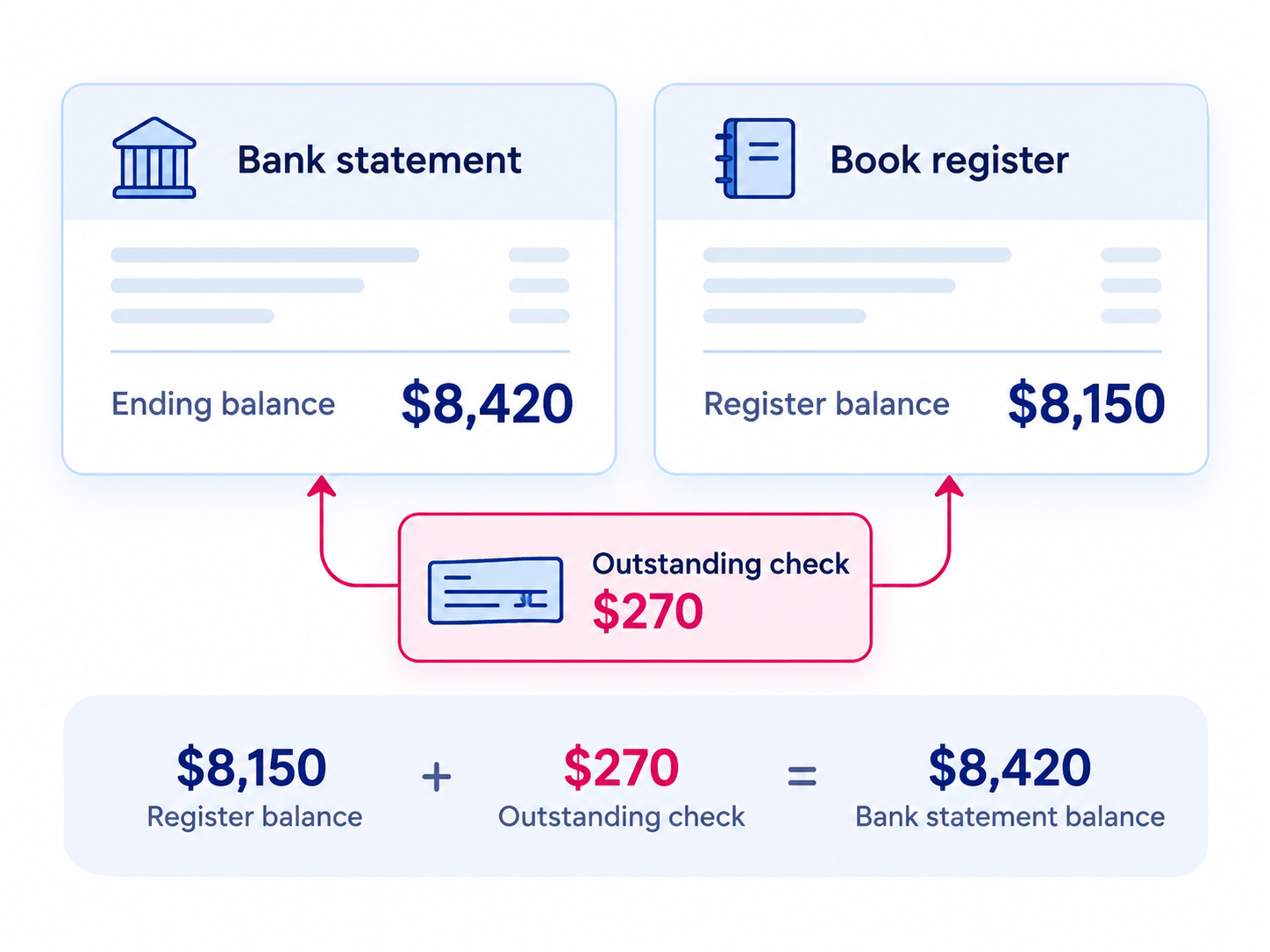
Suppose the September statement ends at $8,420, while the September 30 bookkeeping register balance is $8,150.
That is a $270 difference.
You find a check for $270 that was recorded in the books before September 30 but didn't clear the bank until October.
That may explain the difference without any incorrect transaction. Proper reconciliation takes legitimate outstanding items into account.
Do this: Review outstanding checks and deposits in transit. Compare when each was recorded and when it cleared. Don't delete or redate a valid transaction just to make the totals match.
Then look for missing, duplicate, or misdated transactions
If outstanding items don't explain it, check whether a transaction appears on one side but not the other.
Work through the statement systematically. Watch for duplicated imported deposits, bank fees missing from the books, checks recorded twice, and transactions on the wrong dates.
If you have a connected bank feed, remember that imported data still needs review. The weekly bookkeeping checklist explains a simple process for catching duplicates and unclear entries while they're fresh.
Do this: Find the source record for each mismatch. Correct the actual entry where appropriate, rather than creating a separate adjusting transaction simply to erase the difference.
Check whether a transfer was recorded correctly
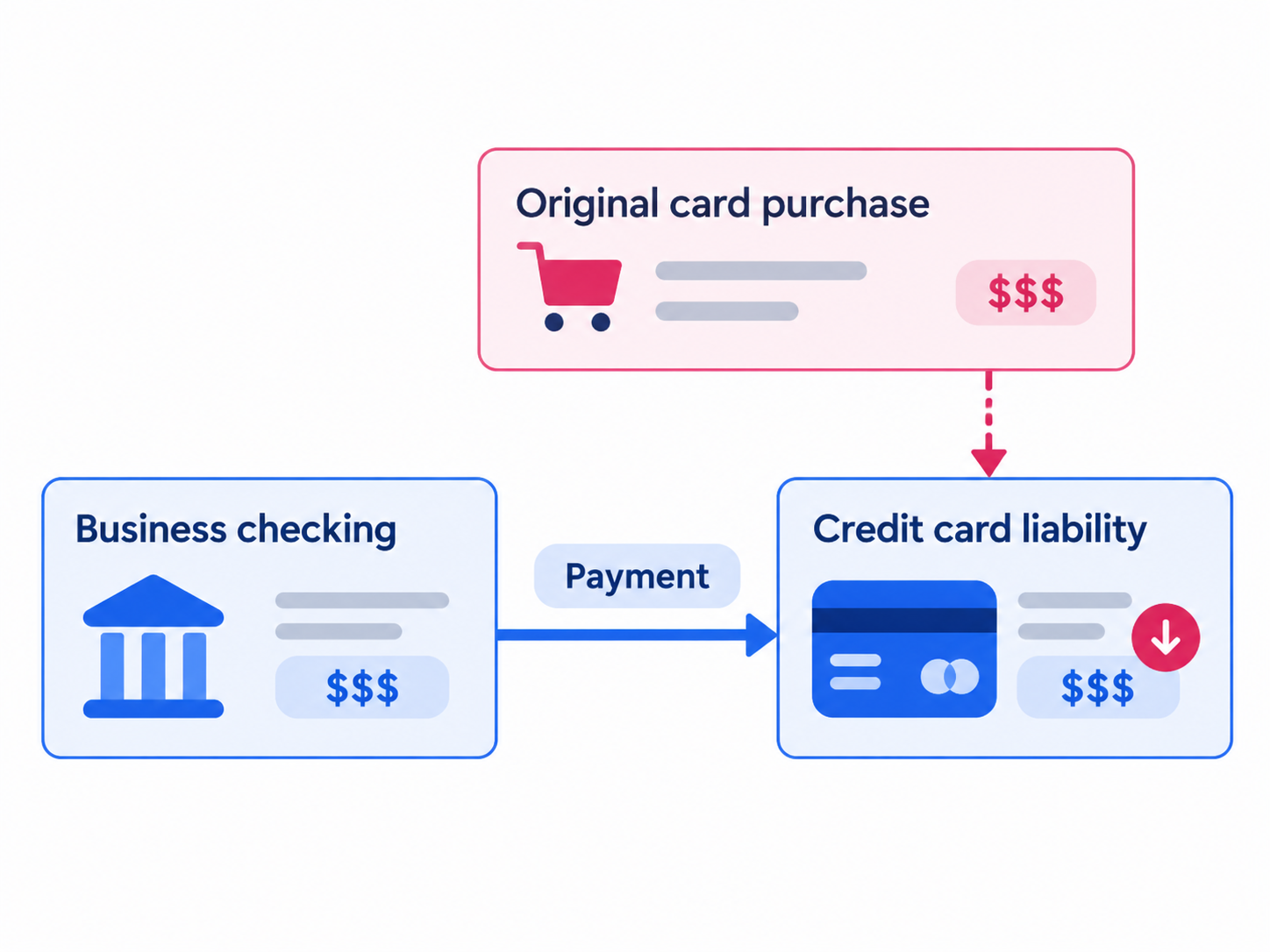
If money moved between your business checking and savings accounts, or from checking to pay a business credit card, both sides of that movement matter.
A credit-card payment is not automatically a fresh operating expense. The purchases on the card may have already been recorded. Recording the card payment as another expense can distort the P&L.
If this sounds familiar, the seven-point financial organization check explains why transfers, loans, card payments, and other money movements deserve a closer look.
Do this: Trace the transfer in both accounts and confirm its bookkeeping treatment. Then check whether the underlying accounts reconcile.
Check the beginning balance if the difference will not go away
If you've checked the period and still cannot account for the discrepancy, look at the prior month's completed reconciliation.
Was the opening balance changed later? Was an earlier cleared transaction deleted or edited? Did an old outstanding item remain unresolved?
An error carried forward from last month can make this month difficult to reconcile.
Do this: Compare the previous reconciliation report with what is currently in the books. If old reconciled activity has changed, determine why before correcting it.
What you should not do
Don't enter an unsupported adjustment just to force the difference to zero. Don't mark everything cleared to make the screen turn green. Don't assume the live bank balance should match an older statement date.
And don't feel pressured to upgrade your software to solve a question that might come down to one missing or outstanding item.
If you can't find the cause, keep the question visible and get help with the specific account and period. A working bookkeeper can review the evidence without rebuilding the entire business.
The quick troubleshooting order
Confirm the right account and statement date.
Identify uncleared checks and deposits in transit.
Look for missing, duplicated, or misdated activity.
Verify transfers and credit-card payments.
Review the previous reconciliation and opening balance.
Correct supported errors, then reconcile again.
The goal is not matching numbers at any cost. It's being able to explain the difference.
For another related decision that often causes confusion, bank balance and profit answer different questions. A correct bank balance alone does not tell you whether the business earned a profit.
Frequently asked questions about bookkeeping balance differences
-
Not always. An uncleared check or deposit in transit can make the book balance different from the statement's ending balance, even when the transactions were recorded correctly. Compare the same account and statement date, then reconcile the period. The difference should be fully explained by the reconciliation, not erased by changing valid transactions.
-
Something recorded in a previously reconciled period may have been edited, deleted, or marked as unreconciled. Pull up last month's reconciliation report and compare it with the transactions currently in the account. Find out what changed before making any corrections.
-
No. A reconciliation helps confirm that the account activity agrees with the statement, including legitimate outstanding items. It doesn't guarantee that every transaction was categorized correctly or that transfers, loan payments, and other activity were recorded properly. Those still need review.
-
Keep the bank statement, the last completed reconciliation report, and a list of the transactions you've checked. Note the account, month, and exact amount that remains unexplained. A bookkeeper can use those records to help trace the cause without starting your books over.
Free one-page tool: The Bookkeeping Balance Troubleshooter puts this order on a single page, with room to record a discrepancy and what you checked. It's included at the end of this week's Substack article about why you can still be unsure of your numbers after finishing the bookkeeping.
Get the next post in your inbox.
When a new post goes up, you'll get an email with the link. Nothing else.
Something went wrong. Please try again.
No spam. Unsubscribe anytime.
You're in!
You'll get new Own Your Bookkeeping posts and updates in your inbox.